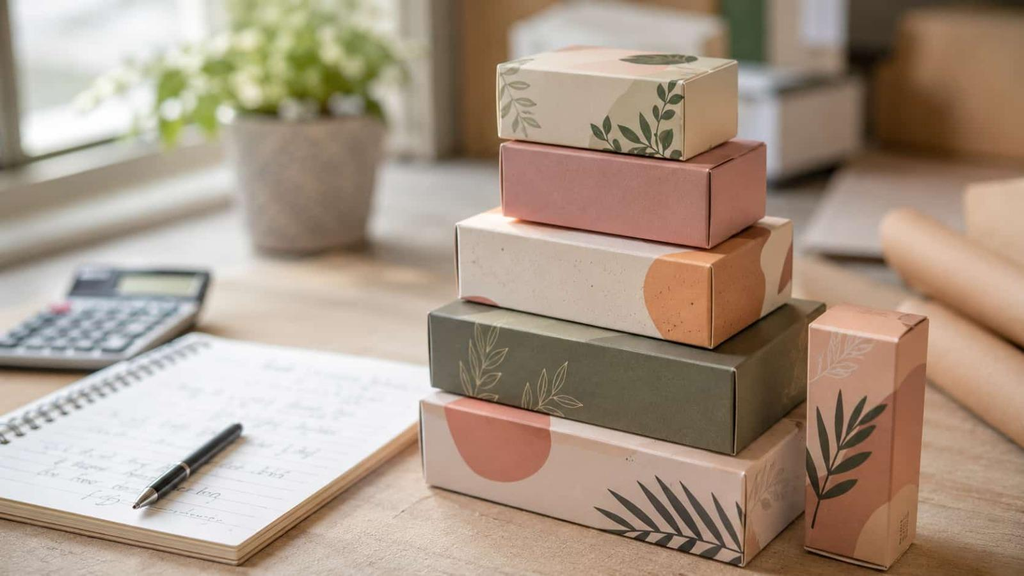
Founders spend months on formulation and almost no time on what happens in the thirty seconds after a package arrives at someone’s door. That’s a mistake — because unboxing is one of the only moments in the entire customer relationship where you have someone’s full, undivided attention.
The Moment Nobody Optimizes For
By the time a customer opens your package, they’ve already decided to buy. The unboxing moment isn’t a conversion tool — it’s a retention and word-of-mouth tool, and those are arguably harder and more valuable to earn. A product that performs well but arrives in forgettable packaging gets used and maybe reordered. A product that performs well and arrives in packaging that feels considered gets photographed, shared, and remembered — and that difference compounds over every single order, not just the first one.
Structure Communicates Before Words Do
Before a customer reads a single word of your copy, the box itself has already told them something. A flimsy, generic box signals “this was an afterthought.” A well-structured box — one with actual heft, a satisfying open mechanism, a snug fit rather than a product rattling around inside — signals that the same care went into the packaging as went into the product. This isn’t about spending the most money on packaging; it’s about the packaging matching the positioning. A $15 product in an over-engineered luxury box feels dissonant. A $60 product in a flimsy generic mailer feels dissonant in the other direction. The goal is coherence, not maximalism.
The Difference Between Protective and Premium
These aren’t the same problem, and conflating them leads to bad decisions. Protective packaging is about the product surviving transit intact — the right cushioning, the right structural strength for what’s inside, sized correctly so the product isn’t rattling around or getting crushed. Premium packaging is about the experience of opening it — finishes, printed interior surfaces, the tactile quality of the material, small design details a customer notices in the moment. Brands aiming for real presentation quality often turn to custom rigid boxes built for premium unboxing once the protective side is already solved.
A brand shipping fragile glass bottles needs to solve the protective problem first, full stop — no amount of premium finish matters if the product arrives broken. But once protection is handled, premium touches are where retention actually gets built, and they’re often cheaper to add than founders expect: an interior print, a thoughtfully chosen finish, a structural detail that makes opening the box feel like an event rather than a chore.
What Actually Gets Photographed and Shared
If organic social content matters to your growth strategy, it’s worth being honest about what actually gets posted: it’s rarely the product alone. It’s the moment of opening — the box, the reveal, the small design touches that feel intentional. Brands that treat their packaging as content-worthy, rather than purely functional, tend to generate meaningfully more organic unboxing content without paying for it. That’s not a guess — it’s the entire premise behind why subscription box companies invest so heavily in packaging relative to the actual product cost inside.
Practical Levers, Not Just Aesthetics
A few concrete things actually move this needle, beyond just “make it look nicer”:
- Fit matters more than finish. A box sized correctly for the product feels considered even without any premium finishing. A beautiful box with a product rattling around inside undoes the effect.
- One surprising detail beats five generic ones. A single well-executed touch — an interior print, a satisfying magnetic close, a thoughtful insert — reads as more intentional than trying to add premium touches everywhere at once.
- Consistency across orders matters as much as any single box. A customer who reorders and gets a noticeably different, cheaper-feeling package than their first order notices — and it reads as decline, even if nothing else about the product changed.
The shipping layer counts too. For DTC brands, the outer shipping box or mailer is the first thing a customer sees, before they ever reach the retail-facing packaging inside. A generic, damaged-looking outer box undercuts an otherwise well-designed product box before the customer even gets to it. This is why more brands are moving to custom mailer boxes for e-commerce brands that carry branding through to the very first touchpoint.
The Business Case, Plainly Stated
Packaging spend often gets treated as a cost to minimize rather than a lever to pull, largely because its return is harder to attribute directly to a single sale. But retention, reorder rate, and organic sharing are all measurably influenced by the unboxing experience — and unlike a lot of marketing spend, packaging quality compounds automatically on every single order without any additional work once the design is set. It’s one of the few growth levers that scales for free.