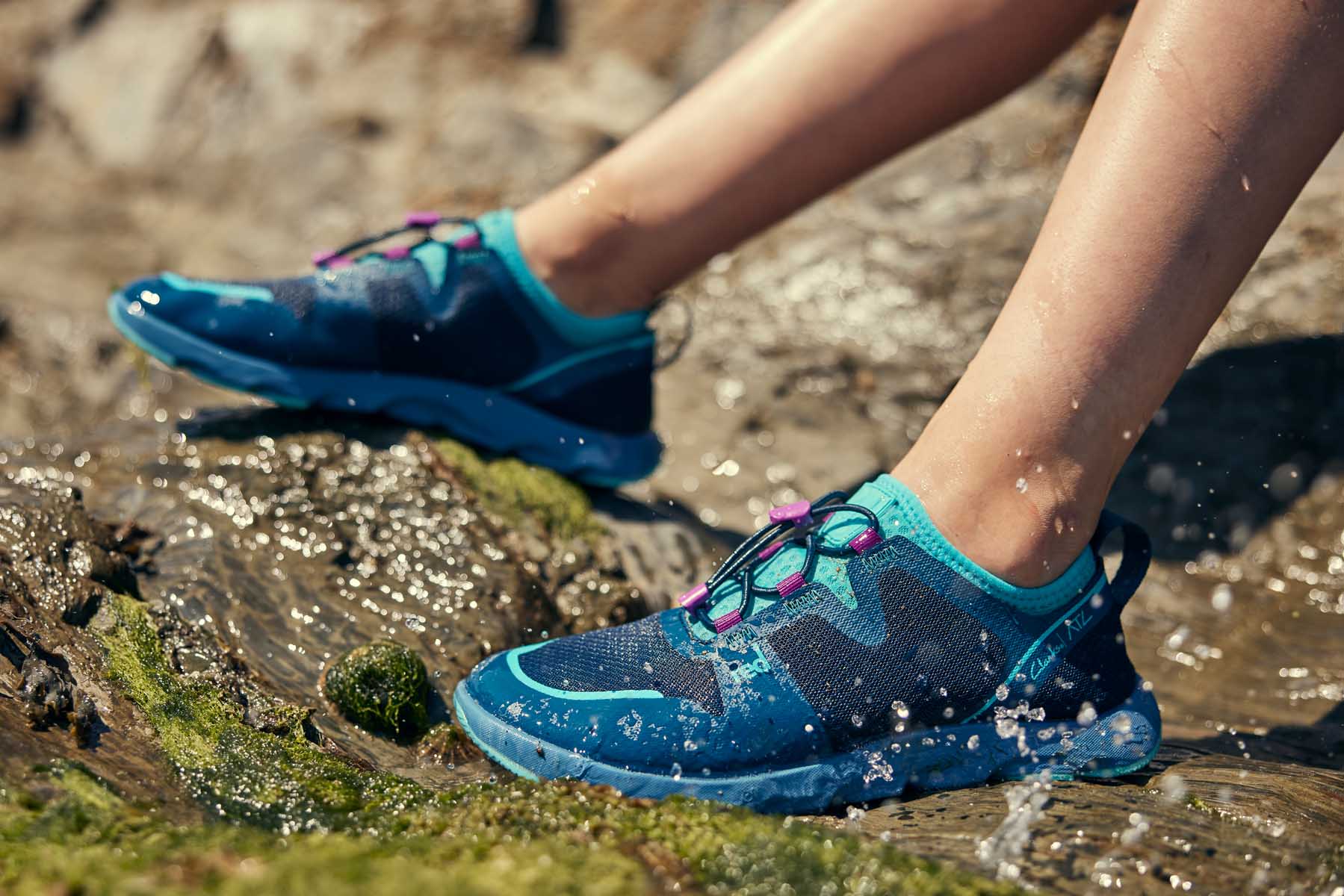
Anyone who has slipped on wet rocks, stubbed a toe on a hidden shell, or spent an afternoon squelching around in soaked sneakers knows the problem. Water shoes are designed to solve exactly these issues, yet plenty of people are unsure what they are really for or whether they need a pair. This guide gives you a clear rundown of what water shoes are used for, the activities they suit best, and why they beat the alternatives of bare feet or ordinary shoes. By the end, you will know whether a pair belongs in your kit.
What Are Water Shoes?
Water shoes are lightweight footwear built for wet environments. They are usually made from breathable mesh with a grippy sole and drainage holes, so water escapes quickly and the shoe dries fast rather than staying heavy and soggy. In essence, they have two jobs. The first is to protect your feet from whatever lies underfoot, and the second is to keep their grip on slippery surfaces where other footwear would let you down. Together, these features make them a practical choice for anyone spending time in and around water.
The Main Purpose: Protection and Grip in Wet Conditions
At their core, water shoes exist to protect your feet and keep you upright. They shield your soles from rocks, shells, broken glass, and rough surfaces that can easily cause cuts and bruises. At the same time, their specially designed soles grip wet, slippery ground where bare feet or regular shoes would slide out from under you. This combination of protection and traction is the heart of what water shoes are for, and it is what makes them so useful across such a wide range of activities.
Water Activities Where They Shine
Water shoes come into their own across many activities. Paddlers wearing them for kayaking, canoeing, and paddleboarding get secure footing when launching and landing. Boaters and rafters benefit from reliable grip on a slippery boat ramp or wet deck. Snorkellers and swimmers in rocky areas gain protection over sharp or uneven seabeds. For beach and rockpool explorers, a good pair of water shoes means you can scramble across rocks and shells without a second thought. And for river crossings and wet trails, they protect your feet while keeping their grip on unstable ground. Whatever your activity in or near the water, there is a strong case for having a pair.
Everyday and Casual Uses
Water shoes are not only for adventure. Many modern designs look like sneakers or sandals and work perfectly well beyond the water’s edge. They are ideal for pool decks and water parks, where wet tiles can be treacherous, and handy for garden or boat chores that involve getting wet. They also make great travel companions, letting you move seamlessly between land and water on holiday without stopping to change footwear. This versatility is a big part of their appeal, since one pair can cover a lot of ground.
Why Not Just Go Barefoot or Wear Sneakers?
It is a fair question, and the answer comes down to protection and practicality. Going barefoot leaves your feet exposed to cuts, scrapes, and slips, which can quickly ruin a day out. Regular sneakers, on the other hand, soak straight through, stay heavy and wet for hours, and take a long time to dry. Water shoes fill the gap neatly. They give you the protection of a proper shoe combined with quick drainage and fast drying, so your feet stay comfortable rather than waterlogged and wrinkled.
Key Features That Make Them Work
The uses above are only possible because of a few clever design features. Quick-drain holes let water escape rapidly rather than pooling inside the shoe. Breathable, quick-dry material keeps your feet from staying damp. Non-slip soles deliver the traction that keeps you safe on wet surfaces. A secure fit stops the shoe slipping off in water, and toe protection guards against knocks and sharp objects. When you are choosing a pair, these are the features worth looking for, because they are what deliver on everything water shoes are meant to do.
Who Should Own a Pair?
Water shoes suit a wide range of people. Paddlers and watersports enthusiasts get the grip and protection their activities demand. Beachgoers and families appreciate safer, more comfortable days by the water. Travellers value the convenience of footwear that handles both land and sea. And really, anyone who spends time around lakes, rivers, pools, or the coast will find a pair genuinely useful. If that sounds like you, water shoes are well worth considering.
Frequently Asked Questions
What is the point of water shoes?
They protect your feet from rocks, shells, and sharp objects while providing grip on slippery wet surfaces, all with quick drainage so they dry fast.
Can you swim in water shoes?
Yes. Lightweight water shoes are designed to be worn in the water, offering protection in rocky areas without weighing you down.
Are water shoes good for the beach?
Absolutely. They protect against hot sand, sharp shells, and slippery rocks, making beach and rockpool exploring far more comfortable.
Can you wear water shoes on land?
Yes. Many modern water shoes look like sneakers or sandals and are comfortable enough to wear casually, on and off the water.
Last Thoughts
The purpose of water shoes comes down to protection and grip in and around water, across activities ranging from kayaking and boating to beach days and travel, all with the convenience of quick drying. For anyone who spends time near the water, they solve real problems that bare feet and sneakers simply cannot. When choosing a pair, pick one suited to your main activity, and if you need help with sizing or want to compare options, browse a range and find the fit that works for you.