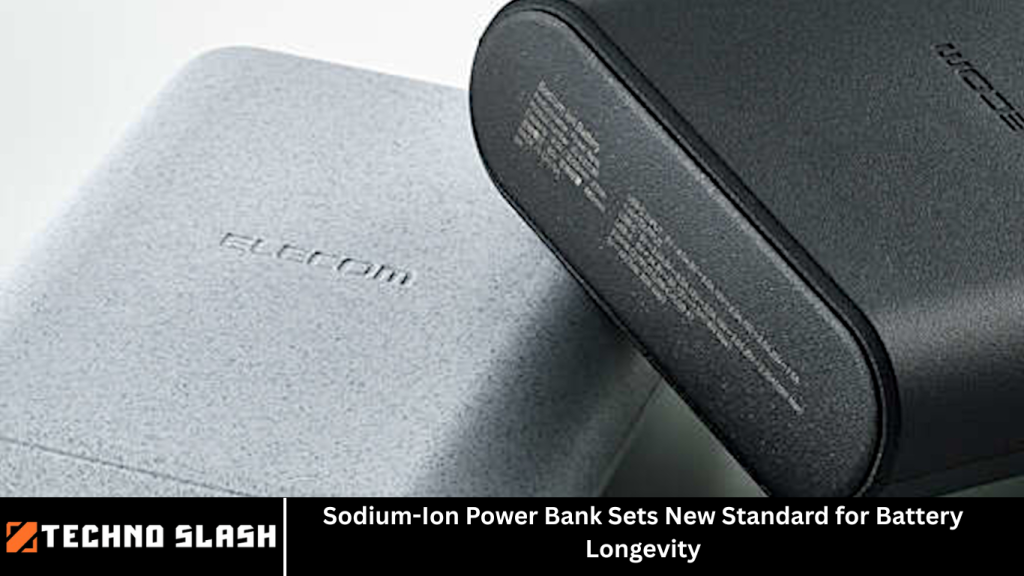
In a world increasingly dependent on mobile electronics, the limitations of traditional lithium-ion batteries are becoming more apparent. The recent unveiling of the world’s first long-life sodium-ion power bank signals a monumental shift in energy storage technology.
Designed to address key issues such as resource scarcity, environmental impact, and battery lifespan, this innovation could redefine the way we power our portable devices. In this article, we explore how the sodium-ion power bank sets a new benchmark for battery longevity and efficiency.
As our world becomes increasingly reliant on mobile electronics, the limitations of traditional lithium-ion batteries are becoming harder to ignore. Issues like finite lithium resources, environmental concerns, and limited battery lifespans have pushed researchers to explore more sustainable alternatives.
More Read: Best GPU Prices in 2025: Every Nvidia, AMD, and Intel Card Ranked by Cost
The Rise of Sodium-Ion Technology
Why Sodium?
Sodium, an abundant and inexpensive element, offers a sustainable alternative to lithium. While lithium reserves are concentrated in a few geographic areas and involve environmentally taxing extraction processes, sodium is widely available in seawater and the Earth’s crust.
The Science Behind Sodium-Ion Batteries
Sodium-ion batteries function similarly to lithium-ion ones, using a sodium-based electrolyte and intercalation materials that can store and release sodium ions. However, because sodium ions are larger and heavier than lithium ions, early prototypes suffered from lower energy density and slower charge-discharge rates.
The World’s First Long-Life Sodium-Ion Power Bank
The newly launched sodium-ion power bank stands as a technological marvel. Engineered by a leading clean energy startup, this device features a cutting-edge sodium-ion battery cell with a lifespan exceeding 3,000 charge cycles—nearly double that of standard lithium-ion counterparts.
Key Specifications:
- Battery Capacity: 10,000 mAh
- Cycle Life: Over 3,000 cycles
- Charging Ports: USB-A, USB-C, and wireless charging pad
- Charging Time: 0 to 100% in 90 minutes
Weight: 220 grams
Operating Temperature Range: -20°C to 60°C
Advantages Over Lithium-Ion Power Banks
Longer Lifespan
With more than 3,000 charge-discharge cycles, the sodium-ion power bank offers extended usability, reducing the frequency of replacements and contributing to less electronic waste.
Improved Safety
Sodium-ion batteries are less prone to thermal runaway and combustion. This makes them a safer option, especially for use in high-temperature environments or during travel.
Eco-Friendliness
Lithium mining has been linked to significant environmental damage, including water depletion and habitat destruction. Sodium, by contrast, can be extracted with less environmental impact, and its abundance ensures sustainable sourcing.
Cost-Effectiveness
As sodium is more abundant than lithium, large-scale production of sodium-ion batteries is likely to be more economical, leading to affordable power banks for consumers.
Cold-Weather Performance
Sodium-ion cells perform better than lithium-ion ones at sub-zero temperatures, making them ideal for use in extreme climates.
Potential Applications Beyond Power Banks
While the current spotlight is on portable chargers, sodium-ion technology holds promise for broader applications:
- Electric Vehicles (EVs): Companies are exploring sodium-ion batteries as a low-cost alternative for EVs, especially in budget and urban models.
- Grid Storage: Sodium-ion batteries could provide stable and scalable solutions for renewable energy storage.
- Consumer Electronics: Phones, laptops, and tablets could eventually incorporate sodium-ion batteries for safer and longer-lasting performance.
Market Reception and Industry Impact
Since its launch, the sodium-ion power bank has garnered attention from both tech enthusiasts and sustainability advocates. Early reviews highlight its fast charging, reliability, and lightweight design. Analysts predict that as the technology matures and production scales up, sodium-ion devices could claim a significant share of the portable energy storage market.
Industry giants such as CATL and Faradion are investing heavily in sodium-ion R&D, indicating a strong future for this alternative battery technology. Governments, too, are supporting initiatives aimed at diversifying battery sources to reduce reliance on lithium imports.
Limitations and Ongoing Challenges
Despite its promise, sodium-ion technology still faces hurdles:
- Lower Energy Density: Sodium-ion batteries generally have less energy per unit weight than lithium-ion batteries, which could be a limitation for high-performance devices.
- Material Compatibility: Electrodes and electrolytes must be optimized to prevent degradation over time.
- Manufacturing Infrastructure: The production lines for sodium-ion batteries need to be developed or adapted from lithium-ion facilities.
The Road Ahead
Ongoing research aims to overcome these barriers. Scientists are working on next-gen cathode materials and solid-state sodium-ion batteries that could rival or even surpass lithium-ion technology. Collaboration between academia, industry, and government bodies will be crucial in accelerating development and adoption.
Frequently Asked Question
Are sodium-ion power banks available for consumers now?
Yes, the first commercial models have been launched and are available through select online and retail channels. However, availability may be limited initially as production scales up.
How do sodium-ion power banks compare in charging speed?
The latest models, including the one highlighted in this article, offer competitive charging speeds, with full charge achieved in about 90 minutes.
Are they heavier than lithium-ion power banks?
Sodium-ion batteries are slightly heavier due to the larger atomic mass of sodium, but the difference is minimal and offset by longer cycle life and safety benefits.
Can I use a sodium-ion power bank with my existing devices?
Absolutely. These power banks come with standard USB-A, USB-C, and wireless outputs compatible with most modern devices.
How safe are sodium-ion power banks?
They are generally safer than lithium-ion ones due to lower risk of overheating or combustion, making them ideal for travel and rugged use.
What makes them eco-friendlier than lithium-ion batteries?
Sodium is abundant and easier to extract, causing less environmental harm. Additionally, sodium-ion batteries reduce reliance on rare earth metals.
Will they replace lithium-ion batteries completely?
Not entirely. While they will become a strong alternative in many areas, lithium-ion batteries still offer higher energy density, which is crucial for high-performance applications like flagship smartphones and long-range EVs.
Conclusion
The launch of the first long-life sodium-ion power bank marks a pivotal moment in battery innovation. Offering a safer, more sustainable, and longer-lasting alternative to lithium-ion technology, sodium-ion batteries are poised to transform not just portable charging, but the entire landscape of energy storage. As adoption grows and technology advances, we may soon witness a new era where sodium takes center stage in powering our everyday lives.