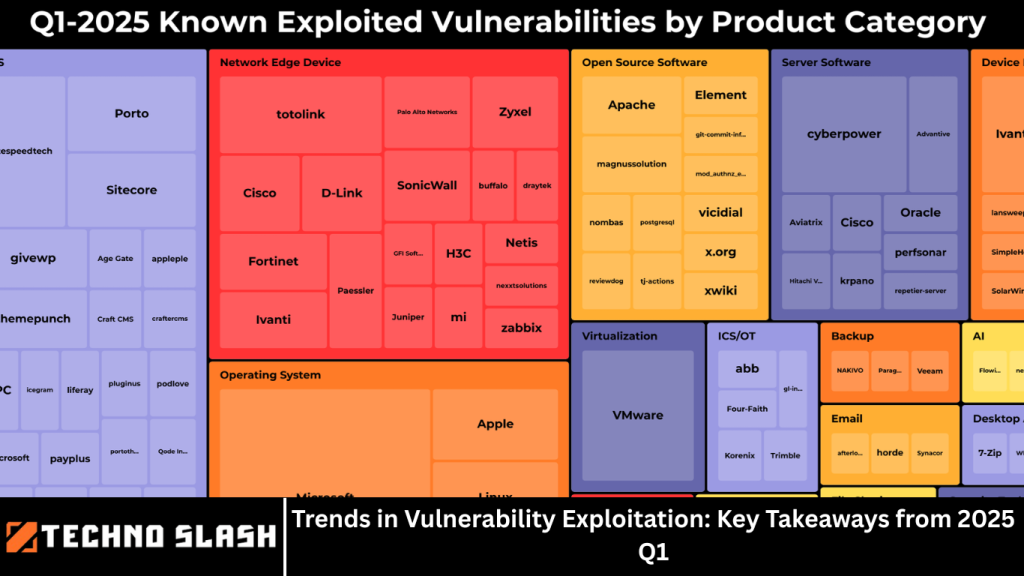
In an era marked by rapid technological innovation, the landscape of cybersecurity has evolved to meet increasingly sophisticated threats. One critical aspect of cybersecurity is vulnerability exploitation, where attackers take advantage of weaknesses in software, systems, or hardware to compromise the security of an organization or individual.
Understanding trends in vulnerability exploitation is crucial for defending against these threats, which can have disastrous consequences, from data breaches to the compromise of critical infrastructure.The first quarter of 2025 has seen new patterns, tactics, and techniques in vulnerability exploitation, driven by emerging technologies.
This article provides a detailed analysis of the trends observed in vulnerability exploitation during Q1 2025, highlighting key takeaways and offering insights into how businesses and security professionals can stay ahead of these threats.
More Read: Countries Strengthen Cybersecurity in Response to Growing Threats
The Rise of AI-Driven Exploits
The Role of AI in Crafting Advanced Exploits
Artificial Intelligence (AI) has made a significant impact on cybersecurity, and in Q1 2025, attackers have increasingly leveraged AI tools to identify and exploit vulnerabilities. AI-driven exploits enable attackers to analyze vast amounts of code quickly, finding weaknesses that might take human hackers much longer to detect. This capability makes attacks faster, more efficient, and harder to defend against.
In particular, AI tools can automate the process of scanning for vulnerabilities, including zero-day exploits (previously unknown vulnerabilities). As these tools become more accessible, both skilled cybercriminals and less experienced attackers can conduct sophisticated campaigns. They may exploit vulnerabilities in AI systems themselves, creating a feedback loop where AI becomes both a tool for attackers and a challenge for defenders.
Exploiting Machine Learning Systems
Another emerging trend is the exploitation of machine learning (ML) models, which are increasingly integrated into enterprise systems and applications. These models, while powerful, have their own vulnerabilities. Attackers have been observed exploiting weaknesses in ML systems, particularly in areas such as adversarial machine learning, where subtle inputs can trick a model into making incorrect predictions or decisions.
The integration of ML into cybersecurity defenses has also led to a new battlefront. While defenders use ML to detect threats and analyze vulnerabilities, attackers are finding ways to bypass or mislead these systems. This has increased the demand for more advanced defensive AI that can outpace the attacks it’s designed to thwart.
Increasing Use of Ransomware
Ransomware as a Service
Ransomware attacks have been a significant issue for several years, but the trend of “Ransomware as a Service” (RaaS) became even more prevalent in Q1 2025. This model allows even relatively unskilled cybercriminals to launch ransomware attacks by leveraging ready-made malware kits that can be easily customized. The accessibility of RaaS has democratized ransomware, making it an attractive option for a broader range of malicious actors.
As the number of ransomware attacks continues to increase, many organizations are falling victim to these highly automated and often devastating campaigns. Attackers are now targeting industries with critical infrastructure, such as healthcare, energy, and finance, because these sectors are more likely to pay ransoms due to the urgency of restoring operations.
Double Extortion Tactics
One alarming trend observed in Q1 2025 is the rise of double extortion tactics in ransomware attacks. In addition to encrypting an organization’s data and demanding a ransom for its release, attackers now exfiltrate sensitive data and threaten to release it publicly if the ransom is not paid. This two-pronged approach places even more pressure on victims and increases the chances that attackers will receive payment.
The increase in double extortion tactics has led to a rise in the number of targeted organizations paying ransoms, despite widespread advice against doing so. This dynamic is further fueled by the rapid pace of attacks and the financial and reputational damage that results from a data breach or loss of critical information.
Exploitation of Internet of Things (IoT) Devices
Exploiting IoT Devices and Networks
The Internet of Things (IoT) is another key area where vulnerability exploitation has increased in Q1 2025. IoT devices, from smart home products to industrial systems, are often designed with convenience in mind, but security is frequently an afterthought. This has created a vast attack surface for cybercriminals, who target vulnerabilities in poorly secured devices to gain unauthorized access to networks.
In particular, attacks on IoT devices have been linked to large-scale botnets, which are networks of compromised devices used to launch Distributed Denial of Service (DDoS) attacks or carry out other malicious activities. The sheer number of connected devices worldwide has made IoT vulnerabilities a lucrative target for attackers, and with many devices running outdated or unpatched firmware, the risk of exploitation is growing.
Smart Cities and Critical Infrastructure
As smart cities become more prevalent, the intersection of IoT devices and critical infrastructure has created new opportunities for exploitation. Vulnerabilities in the IoT systems that control public utilities, traffic management, and emergency services could be exploited to cause chaos in urban environments. Given the high stakes involved, these types of attacks could have far-reaching consequences, not just for the targeted organizations but for entire communities.
Supply Chain Attacks
Supply chain attacks continue to be a major trend in Q1 2025, with attackers targeting third-party vendors and service providers to compromise their customers. These attacks often exploit vulnerabilities in software or hardware that are widely used across many organizations, allowing attackers to infiltrate multiple systems with a single exploit.
One of the most high-profile supply chain attacks was the SolarWinds hack, which demonstrated how vulnerabilities in trusted software can be used to launch cyberattacks on a massive scale. The lessons learned from that attack have driven more organizations to focus on securing their supply chains, but attackers continue to find new ways to exploit these weak links.
Key Takeaways from 2025 Q1
As Q1 2025 draws to a close, the following key takeaways emerge from the observed trends in vulnerability exploitation:
- AI-Powered Attacks: AI and machine learning are becoming integral tools for cybercriminals, enabling more sophisticated and automated attacks.
- Ransomware Escalation: Ransomware remains a major threat, with the rise of Ransomware as a Service (RaaS) and double extortion tactics increasing the pressure on organizations.
- IoT Vulnerabilities: As more devices become interconnected, the risk of exploitation of IoT vulnerabilities continues to rise, particularly in critical infrastructure and smart cities.
- Supply Chain Risks: Attacks on third-party vendors are becoming more prevalent, as attackers exploit vulnerabilities in widely used software and services.
- Zero-Day Exploits: The continued use of zero-day vulnerabilities, which are previously unknown to the vendor and the public, is contributing to the increasing sophistication of attacks.
- Cloud Security: With businesses increasingly relying on cloud computing, attackers are focusing on exploiting vulnerabilities in cloud platforms, applications, and services.
Frequently Asked Question
What is vulnerability exploitation?
Vulnerability exploitation refers to the process by which attackers take advantage of weaknesses or flaws in software, systems, or hardware to gain unauthorized access, escalate privileges, or disrupt operations. These vulnerabilities can range from coding errors to design flaws in software or network configurations.
How are AI and machine learning being used in cybersecurity attacks?
AI and machine learning are being used by cybercriminals to automate the identification and exploitation of vulnerabilities. These tools can quickly analyze large amounts of data, uncover security weaknesses, and even craft new exploits, making attacks more efficient and harder to defend against.
What is Ransomware as a Service (RaaS)?
Ransomware as a Service (RaaS) is a business model that allows even less skilled cybercriminals to carry out ransomware attacks by purchasing pre-made malware tools. These services often include customer support, making it easier for attackers to execute successful attacks.
Why are IoT devices a target for attackers?
IoT devices are often targeted because they are frequently insecure, running outdated software or lacking proper security protections. With millions of connected devices worldwide, cybercriminals exploit vulnerabilities in IoT systems to launch attacks, often turning these devices into botnets for large-scale operations.
How do double extortion ransomware attacks work?
Double extortion ransomware attacks involve attackers encrypting a victim’s data and demanding a ransom for its decryption. In addition to this, attackers exfiltrate sensitive data and threaten to release it publicly unless the ransom is paid, creating additional pressure on victims to comply.
What are supply chain attacks?
Supply chain attacks target third-party vendors or service providers that have access to the networks of multiple organizations. By exploiting vulnerabilities in software or hardware used across many companies, attackers can infiltrate multiple organizations with a single attack.
What steps can organizations take to protect against vulnerability exploitation?
Organizations can protect against vulnerability exploitation by regularly patching software and systems, using advanced threat detection tools, conducting security audits, and educating employees on security best practices. Additionally, securing supply chains and implementing strong network segmentation can reduce the impact of attacks.
Conclusion
The first quarter of 2025 has highlighted significant shifts in the landscape of vulnerability exploitation, driven by advanced technologies and evolving attack methods. From the rise of AI-powered exploits and ransomware-as-a-service models to the growing threat of IoT vulnerabilities and supply chain attacks, the tactics used by cybercriminals are becoming more sophisticated and widespread. As these trends continue to shape the cybersecurity environment, it is crucial for organizations to adopt proactive security measures, stay informed about emerging threats, and invest in robust defense strategies. By doing so, businesses can better safeguard their systems, data, and infrastructure against the increasing risk of vulnerability exploitation in 2025 and beyond.