Digital age, artificial intelligence (AI) is rapidly transforming the way people interact with technology. From voice assistants like Siri and Alexa to customer service chatbots, AI is becoming increasingly ingrained in everyday life.
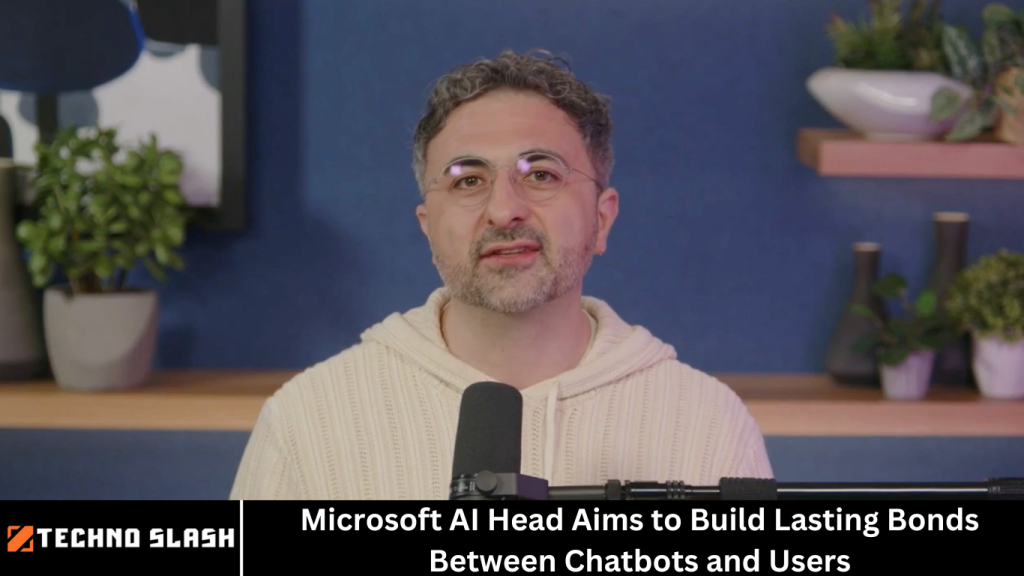
At the forefront of this revolution is Microsoft, a tech giant with a long history of innovation. As the company enters its 50th year, Microsoft’s artificial intelligence division is working on a new mission: to build lasting bonds between chatbots and users. Mustafa Suleyman, the head of Microsoft’s AI division, recently shared his ambitious vision for the future of AI.
His goal is to create AI companions that are not only smart and efficient but also personal, adaptable, and emotionally engaging. This initiative aims to go beyond simple chatbots, pushing the boundaries of what AI can offer and paving the way for more meaningful human-AI interactions.We will explore the implications of Suleyman’s vision, the current state of chatbot technology, and the role Microsoft is playing in shaping the future of AI.
More Read: Stephen Fry’s ‘vocal twin’ to feature in AI installation at Hay Festival
The Growing Role of AI in Daily Life
AI has already become a central part of many people’s lives. Virtual assistants like Apple’s Siri, Google Assistant, and Amazon’s Alexa have made tasks such as setting reminders, answering questions, and playing music as simple as asking for them out loud. Chatbots have similarly revolutionized customer service, providing instant support and assistance without the need for human intervention.
However, the vast majority of these AI systems are transactional. They follow scripts, respond to queries, and perform specific tasks but do not engage in meaningful conversations. This is where Suleyman’s vision comes into play. His goal is to create AI that goes beyond basic functionalities and can develop deeper, more personal relationships with users over time.
Personalization: The Key to Building Relationships
One of the central ideas behind Microsoft’s AI vision is personalization. Suleyman believes that in the future, everyone will have a personalized AI companion that adapts to their preferences, behaviors, and needs. Just as we form personal relationships with other people, we could eventually form bonds with AI systems that understand our individual personalities and quirks.
“We’re really trying to land this idea that everybody is going to have their own personalized AI companion,” Suleyman explained. “It will, over time, have its own name, its own style. It will adapt to you. It may also have its own visual appearance and expressions.”
This level of personalization could create a more intimate, human-like interaction between AI and users. The more an AI system interacts with a person, the more it could learn and adapt, becoming more in tune with that person’s preferences, emotions, and way of thinking. This idea of personalized AI could revolutionize everything from personal assistants to customer support, education, and even healthcare.
The Role of Emotional Intelligence in AI
One of the major challenges of building AI companions that form lasting relationships with users is emotional intelligence. While current AI systems can understand and respond to basic emotional cues, they do not yet possess the full range of emotional intelligence needed to engage in meaningful, empathetic conversations.
To address this, Microsoft’s AI division is working on developing systems that can recognize and respond to a wider variety of emotional signals. For example, AI could analyze tone of voice, word choice, and other non-verbal cues to determine a person’s mood and adjust its responses accordingly.
This approach would make AI systems more attuned to the emotional needs of users, creating a more engaging and supportive experience. In healthcare, for example, a personalized AI could provide emotional support for patients coping with chronic illness or mental health challenges. In education, an AI companion could help students by recognizing when they are struggling and offering encouragement or additional resources.
Emotional intelligence is essential for building a lasting bond between users and AI systems. By developing AI that can respond to users’ emotional states in a nuanced and empathetic way, Microsoft could redefine how we think about AI relationships.
Visual and Interactive AI Companions
Another key aspect of Suleyman’s vision for personalized AI is the idea of visual and interactive companions. While most virtual assistants are currently text- or voice-based, the future of AI could involve avatars or characters that users can see and interact with.
These visual AI companions could take many forms, from friendly, human-like figures to abstract, stylized characters. The key is that these companions would not just provide information—they would engage with users in a more immersive way.
For example, imagine an AI companion that greets you with a smile, responds to your questions with facial expressions, and adapts its appearance based on your preferences. This kind of interactive, visual experience would create a stronger sense of presence and connection between users and AI.
In fact, Microsoft has already made strides in this area with products like Microsoft Teams and its virtual reality platform, Mesh. These tools allow users to create virtual avatars that can interact with others in immersive digital environments. As AI technology advances, these avatars could become even more sophisticated, capable of representing personalized companions that adapt to the user’s unique needs and preferences.
AI in Customer Service: A New Era of Support
One of the most immediate applications of personalized AI is in customer service. Chatbots are already widely used in customer support to handle basic queries and provide instant responses. However, most of these bots still lack the ability to provide personalized, human-like interactions.
Suleyman’s vision could change this by creating chatbots that go beyond answering questions. These AI systems could remember past interactions, understand customer preferences, and offer tailored solutions. For example, if a customer contacts a company for help with a product they purchased months ago, a personalized AI could recall the details of that transaction and offer more relevant assistance.
In addition, AI-powered customer service agents could be available 24/7, providing instant support whenever it’s needed. This would not only improve the customer experience but also reduce the burden on human agents, allowing them to focus on more complex or high-priority tasks.
Ultimately, the goal is to create an AI system that is not just a tool but a companion—a trusted advisor that understands the needs and preferences of each individual user.
Ethical Considerations in Building Personalized AI
As AI becomes more personal and integrated into our daily lives, ethical considerations will become increasingly important. One major concern is data privacy. In order for AI companions to be truly personalized, they will need access to vast amounts of personal data—everything from our preferences and habits to our emotional responses and physical health.
Microsoft has long been a leader in promoting responsible AI, and Suleyman has emphasized the importance of transparency and user control when it comes to data. Users must be able to understand how their data is being used and have control over what information is shared with AI systems.
Additionally, AI systems must be designed to avoid bias and ensure fairness. If AI companions are to build lasting relationships with users, they must treat all individuals with respect and without discrimination. This requires careful attention to the design of algorithms and data sets, as well as ongoing monitoring to ensure that AI systems remain inclusive and ethical.
Microsoft is committed to addressing these concerns as it develops its personalized AI systems. By ensuring that these technologies are built with ethics in mind, the company aims to create AI companions that users can trust and feel comfortable interacting with.
The Future of AI: Beyond Chatbots
While chatbots are an important part of Microsoft’s AI strategy, Suleyman’s vision goes far beyond simple text-based conversations. Personalized AI companions could eventually become an integral part of many different industries and applications.
In education, for example, AI companions could act as personalized tutors, helping students learn at their own pace and providing real-time feedback. In healthcare, AI companions could offer mental health support, track physical wellness, and even provide reminders for medication or exercise routines.
The potential for personalized AI is vast, and Microsoft is positioning itself as a leader in this space. By focusing on creating AI that can adapt to users’ needs, emotions, and preferences, the company aims to reshape the way people interact with technology on a daily basis.
Frequently Asked Question
What is Mustafa Suleyman’s vision for AI at Microsoft?
Mustafa Suleyman, the head of Microsoft’s AI division, envisions a future where everyone has their own personalized AI companion. These companions will adapt to users’ preferences, personalities, and needs over time, becoming more intuitive, engaging, and emotionally intelligent. The goal is to create AI systems that form lasting, meaningful relationships with users, similar to human interactions.
How will Microsoft’s AI companions be different from current chatbots?
Unlike current chatbots, which typically offer transactional responses to queries, Microsoft’s future AI companions will be personalized, adaptable, and emotionally intelligent. These AI systems will be able to remember past interactions, learn from users, and offer tailored advice. Additionally, these companions may feature unique visual designs, personalities, and the ability to understand and respond to emotional cues.
What role does personalization play in Microsoft’s AI strategy?
Personalization is a central element of Microsoft’s AI strategy. Suleyman believes that as AI companions become more advanced, they will adapt to the individual needs, preferences, and behaviors of users. This personalization could extend to visual appearance, style, and emotional responses, making interactions with AI more intimate and engaging. The AI companions will evolve with the user over time, becoming better suited to meet their needs.
How will emotional intelligence be integrated into Microsoft’s AI systems?
To create lasting bonds between AI and users, Microsoft is focusing on developing AI systems with emotional intelligence. This involves enabling AI companions to recognize and respond to emotional cues, such as tone of voice and word choice. By doing so, AI can provide more empathetic and supportive interactions, whether in customer service, healthcare, or everyday use. This emotional awareness could make AI companions more relatable and effective.
Will AI companions be available as virtual avatars?
Yes, one aspect of Suleyman’s vision includes the development of visual AI companions. These avatars could take various forms—ranging from human-like figures to abstract characters—and interact with users through facial expressions, body language, and speech. This visual and interactive aspect aims to enhance the personal connection users feel with their AI companions, offering a richer and more immersive experience than traditional text- or voice-based AI systems.
What industries could benefit from Microsoft’s personalized AI companions?
Microsoft’s AI companions could have wide-ranging applications across numerous industries. In customer service, AI could offer personalized, 24/7 support. In education, AI companions could function as personalized tutors, guiding students through lessons. In healthcare, they could provide mental health support, track wellness goals, or assist with managing chronic conditions. The potential for personalized AI is vast, and Microsoft is actively working to make these technologies available across different sectors.
How is Microsoft ensuring that its AI systems are ethical and transparent?
Microsoft is committed to developing AI systems that are transparent and respect user privacy. Ethical considerations, such as data privacy, avoiding bias, and ensuring fairness, are crucial in building trust with users. Suleyman has emphasized the importance of allowing users to control their data and understand how it is being used. By integrating responsible AI principles into the development process, Microsoft aims to create AI companions that users can trust and feel comfortable interacting with.
Conclusion
As Microsoft celebrates its 50th anniversary, the company is looking to the future with an ambitious plan to transform the way we interact with artificial intelligence. Under the leadership of Mustafa Suleyman, Microsoft’s AI division is working to create personalized, emotionally intelligent AI companions that can form lasting bonds with users. By focusing on personalization, emotional intelligence, and ethical considerations, Microsoft aims to build AI systems that go beyond transactional interactions and become trusted companions in everyday life. Whether in customer service, education, healthcare, or other industries, the future of AI is one where human-like interactions are the norm—and Microsoft is leading the charge.