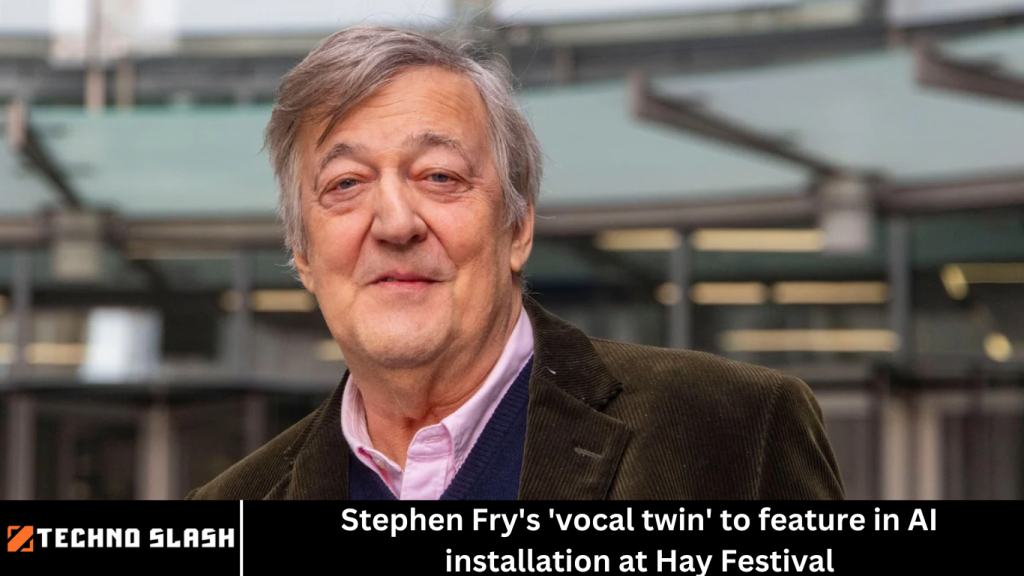
In an unprecedented fusion of art, entertainment, and technology, Stephen Fry’s “vocal twin” will be a key feature of an innovative AI installation at this year’s Hay Festival. The project, called Vocalize, will invite visitors to experience the power of artificial intelligence (AI) and voice technology in a profoundly immersive way.
This collaboration brings together the acclaimed British actor, comedian, and voiceover artist with cutting-edge AI to create a unique and thought-provoking experience. As the festival opens its doors to art lovers and tech enthusiasts alike, the Vocalize installation promises to provoke deep reflections on AI, voice cloning, and the ethical dilemmas that surround them. This article takes a closer look at this groundbreaking installation, Stephen Fry’s involvement, and the larger implications of AI in creative industries.
More Read: AI Isn’t the Sole Driver of Innovation in 2025
The Vocalize Installation: A Sneak Peek into the Future
Running from May 22 to June 1, 2025, the Vocalize installation will allow festival-goers to step inside a soundproof booth where an AI-generated version of Stephen Fry’s voice will guide them through a voiceover training session. The twist? Participants will not only hear Fry’s voice but will actively engage with the AI to record their own voice reel.
As the experience unfolds, things are expected to take an “unexpected turn,” offering a surprising and interactive element that raises critical questions about the nature of voice and the increasing role of AI in creative processes.
The installation promises to be a fascinating demonstration of how AI can replicate human voices with astonishing accuracy, and how the boundaries between human and machine are becoming increasingly blurred. The voice clone, often referred to as a “vocal twin,” will take visitors on an auditory journey that explores both the wonders and the potential dangers of this emerging technology.
Stephen Fry: A Voice of Authority on AI and Ethics
Stephen Fry’s involvement in the Vocalize project is especially significant given his outspoken views on the ethical implications of AI, voice cloning, and digital rights. Fry is best known for his work as a presenter, writer, and narrator—his iconic readings of the Harry Potter audiobooks have earned him legions of fans worldwide.
In recent years, however, Fry has used his platform to raise awareness about the darker side of AI technology, especially in relation to voice cloning and digital manipulation. Fry’s introduction to AI voice cloning came unexpectedly in 2023, when he discovered that his recordings of the Harry Potter books had been used to create an AI-generated version of his voice.
This synthetic voice was then used to narrate a historical documentary without Fry’s prior consent. “I said not one word of that – it was a machine. Yes, it shocked me,” Fry revealed at the time. The discovery led Fry to express concerns about how AI could be misused in the future, especially in terms of creating voiceovers for any number of purposes—without the consent or knowledge of the original voice actor.
As he pointed out, this technology could be used to produce anything from political propaganda to adult content, all under the guise of a trusted public figure’s voice. This incident sparked a public debate about the ethics of AI in the entertainment industry and the need for clearer regulations and protections for artists.
In light of this, Fry’s participation in Vocalize at Hay Festival feels both timely and deeply relevant. By lending his voice to the project, Fry is embracing the potential for AI to enhance creativity while continuing to voice his concerns about the ethical dilemmas AI presents. As he put it, the installation serves as “a brilliant fusion of art and entertainment, revealing both the wonders and pitfalls of AI.”
AI and Voice Cloning: The Technology Behind the Magic
The rise of AI voice cloning technology is a direct result of advances in machine learning and deep neural networks. AI systems are now capable of analyzing vast amounts of audio data to replicate the unique characteristics of an individual’s voice. By training on a person’s speech patterns, tone, pitch, and cadence, AI can create a synthetic voice that mimics the original voice with remarkable accuracy.
Voice cloning technology has numerous applications across industries, from entertainment to customer service, healthcare, and beyond. It can be used to generate voiceovers for films, video games, audiobooks, and advertisements. However, as Fry’s experience highlights, the technology also raises significant ethical concerns.
One of the most significant issues with AI voice cloning is the potential for misuse. Voice replication can be used to create deepfakes—deceptive audio or video content designed to mislead or manipulate audiences. In the hands of bad actors, these deepfakes can be used to create false news reports, impersonate public figures, or manipulate political discourse. For voice actors and public figures, the ability to clone their voices without consent poses a serious threat to their personal brand and intellectual property rights.
As AI technology continues to evolve, so too do the ethical questions surrounding it. How can society ensure that AI is used responsibly and transparently? Who should have control over AI-generated content, and how can individuals protect their voices and digital likenesses from exploitation?
The Ethical Dilemmas of AI in Creative Industries
The Vocalize installation offers a poignant exploration of these ethical dilemmas. By inviting participants to record their own voice reels using AI-generated instructions, the experience forces them to confront the intersection of creativity, technology, and consent. As visitors interact with the installation, they will be forced to consider the potential dangers of AI voice cloning and its impact on creative professionals.
One of the key themes explored by the Vocalize project is the erosion of trust and authenticity in an increasingly AI-driven world. The installation asks important questions about what it means to be the “author” of creative work in a world where machines can replicate human voices with near-perfect accuracy. At what point does the boundary between human and machine become indistinguishable? And how can society ensure that individuals maintain control over their own voices, identities, and creative expressions?
As Fry himself has pointed out, AI is not immune to the same issues that plague other forms of digital communication, such as social media. In a recent interview, Fry compared AI to contaminated water, warning that it could carry “raw sewage and chemicals” in the future. This analogy serves as a cautionary reminder of the need for safeguards and regulation as AI continues to shape the world around us.
The Future of AI and Voice Technology
Looking ahead, the future of AI voice technology holds both exciting possibilities and significant challenges. As the technology continues to improve, it will undoubtedly offer new creative opportunities for artists, writers, and entertainers. AI-generated voices could revolutionize industries such as film, television, and gaming by providing a more efficient and cost-effective way to produce voiceovers.
However, the risks associated with AI voice cloning cannot be overlooked. As the technology becomes more widespread, it is essential that creators, policymakers, and technology companies work together to establish ethical guidelines and regulatory frameworks to protect individuals’ rights and prevent exploitation. The development of AI must be guided by a strong ethical framework that prioritizes transparency, consent, and accountability.
Stephen Fry’s Vocalize installation serves as a timely reminder of the importance of questioning the rapid advancement of AI technology. It challenges us to reflect on the potential consequences of a world in which machines can replicate human voices and, by extension, our identities.
Frequently Asked Question
What is the Vocalize installation at Hay Festival?
The Vocalize installation at the Hay Festival features an AI-generated version of Stephen Fry’s voice, also referred to as his “vocal twin.” Visitors will step into a soundproof booth and interact with Fry’s AI clone as it guides them through a voiceover training session. The installation promises an immersive experience, allowing participants to record their own voice reel while exploring the wonders and ethical challenges of AI technology.
When and where will the Vocalize installation be held?
The Vocalize installation will run from May 22 to June 1, 2025, as part of the renowned Hay Festival. This annual festival is held in Hay-on-Wye, Wales, and attracts visitors from all over the world, featuring a diverse program of talks, workshops, and creative installations.
How does the AI-generated voice of Stephen Fry work in the installation?
The AI-generated voice in Vocalize is a synthetic version of Stephen Fry’s voice, created using machine learning and voice cloning technology. Visitors will hear Fry’s voice guiding them through a voiceover training session and will be prompted to record their own voice reels. The AI can replicate Fry’s voice with remarkable accuracy, leading to an interactive experience that explores the boundaries between human and machine-generated speech.
What ethical issues does the Vocalize installation explore?
The Vocalize installation delves into the ethical dilemmas surrounding AI and voice cloning. By using an AI replica of Fry’s voice, the installation raises important questions about consent, intellectual property, and the potential for misuse of AI technology. The project invites visitors to consider the risks of AI-generated content, such as deepfakes, and the need for clear guidelines to protect individuals’ voices and identities in the digital age.
Why is Stephen Fry participating in the Vocalize project?
Stephen Fry’s involvement in Vocalize is particularly significant given his vocal advocacy on the ethical implications of AI, especially in relation to voice cloning. In 2023, Fry discovered that AI had used his recordings to create a synthetic version of his voice for a documentary, which raised concerns about the potential for unauthorized use of public figures’ voices. By participating in Vocalize, Fry aims to highlight both the creative potential and the risks of AI in a responsible, artistic way, prompting reflection on the role of technology in shaping our future.
How does Vocalize showcase the capabilities of AI technology?
Vocalize is a fascinating demonstration of AI’s ability to replicate human voices with remarkable precision. It showcases the advancements in voice cloning technology, where AI can analyze and imitate a person’s speech patterns, tone, and cadence. Through this installation, visitors will witness firsthand how AI can be used to enhance creativity in voiceover work and entertainment while also highlighting the need for ethical guidelines in AI-generated content.
Who created the Vocalize installation, and who is supporting it?
The Vocalize installation was created by artists Francesca Panetta, Shehani Fernando, and Halsey Burgund, who are passionate about exploring the creative and ethical implications of AI. The project is presented by Sage & Jester, an arts production company, and is partially supported by Arts Council England and other organizations. The installation is part of the wider program of the Hay Festival, which celebrates creativity, literature, and innovation across various fields.
Conclusion
As Vocalize makes its debut at the Hay Festival, it offers a thought-provoking glimpse into the future of AI, voice technology, and creative expression. Stephen Fry’s involvement in this project highlights the growing importance of ethical considerations in the development and application of AI. While the technology holds immense potential, it also raises important questions about consent, ownership, and the preservation of human creativity. By engaging with the installation, visitors will not only experience the awe-inspiring capabilities of AI but will also be invited to reflect on the implications of this technology for our lives and our work. As AI continues to evolve, it is crucial that we remain vigilant, ensuring that its development serves to enhance human creativity rather than diminish it.